
Heparin Catcher HC3 Coated surfaces are designed to specifically bind and capture heparin, an anticoagulant widely used in medical and laboratory settings. Heparin is a complex polysaccharide that plays a crucial role in preventing blood clots during medical procedures, but its presence can interfere with certain diagnostic assays or therapeutic processes. The HC3 Coating technology enables efficient and specific removal or detection of heparin from biological samples, helping improve accuracy in various biochemical applications.
What is Heparin?
Heparin is a naturally occurring glycosaminoglycan that is often administered to patients to prevent blood clots, particularly during surgeries or treatments like dialysis. However, the presence of heparin in blood or plasma samples can complicate diagnostic assays or interfere with therapeutic agents. In such cases, it becomes important to either detect or remove heparin to ensure accurate results. More on heparin’s biological role can be explored at NIH.gov and NCBI.
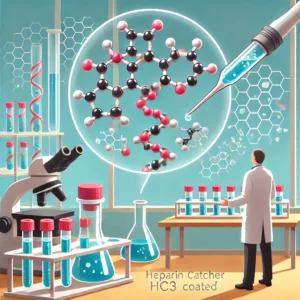
Heparin Catcher HC3 Coating Technology
The HC3 Coating refers to a specialized surface modification that allows for selective binding of heparin molecules. This coating is applied to plates, beads, or other surfaces, enabling the targeted capture of heparin from biological fluids such as blood or plasma. The technology ensures:
- High specificity: The coating is designed to selectively bind heparin without interacting with other blood components.
- Efficiency: Heparin is rapidly captured and immobilized, allowing for its removal or quantification in diagnostic assays.
For further details on surface coating technologies, visit NCBI or CDC.gov.
Applications of Heparin Catcher HC3 Coated Surfaces
- Heparin Removal in Diagnostic Assays
In many clinical and research assays, the presence of heparin can cause false readings or interfere with enzyme activities. Heparin Catcher HC3 surfaces are used to remove heparin from blood or plasma samples before running diagnostic tests. This ensures that the results are accurate and free from heparin-related interference. For more on diagnostic assay protocols, visit FDA.gov and NIH.gov. - Therapeutic Monitoring
Heparin is used as an anticoagulant in patients undergoing dialysis or surgery. Monitoring heparin levels in the bloodstream is critical for patient safety. Heparin Catcher HC3 Coated surfaces are used in assays designed to measure circulating heparin levels, enabling precise monitoring. Explore more about therapeutic monitoring of anticoagulants at CDC.gov and PubMed. - Pharmaceutical Research
In pharmaceutical research, particularly in drug development, removing heparin from plasma samples is crucial for accurately measuring drug efficacy or pharmacokinetics. HC3 coated surfaces help ensure that drug assays are not compromised by residual heparin, providing more reliable results. Research on the impact of heparin in pharmaceutical assays can be found at NIH.gov and NCBI.
Advantages of Heparin Catcher HC3 Coating
- High Affinity for Heparin
The HC3 Coating is optimized to provide high affinity for heparin, allowing for efficient capture even at low concentrations. This makes it highly effective in clinical and laboratory settings where heparin needs to be removed or detected with precision. More on affinity-based capture technologies can be found at Stanford University. - Improved Diagnostic Accuracy
Removing heparin from samples before running diagnostic assays can significantly improve the accuracy of tests. This is especially important in tests that involve enzymes or coagulation factors that may be inhibited by heparin. For more information on assay optimization, visit Harvard University. - Compatibility with Multiple Platforms
The Heparin Catcher HC3 Coating can be applied to a variety of platforms, including 96-well plates, magnetic beads, and filters. This flexibility allows for its integration into different workflows, from manual assays to high-throughput screening platforms. Protocols for adapting HC3-coated surfaces to different platforms are available at FDA.gov and NIH.gov.
Limitations and Considerations
While Heparin Catcher HC3 Coated surfaces offer high specificity and efficiency, there are a few considerations:
- Sample Preparation: Proper sample preparation is essential for ensuring that heparin is efficiently captured by the HC3 Coating. Careful handling of samples is necessary to avoid degradation or loss of heparin. Learn more about sample preparation protocols at CDC.gov.
- Interference with Other Analytes: While HC3-coated surfaces are highly specific for heparin, researchers should ensure that the removal process does not interfere with other components in the sample. Testing with controls is recommended to verify results. More on minimizing interference in assays can be explored at NCBI.
Future Directions in Heparin Detection
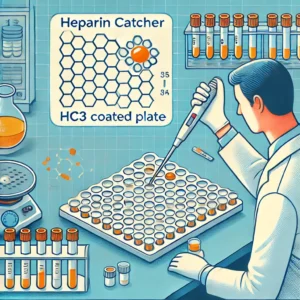
As research progresses, newer technologies are being developed to further enhance the specificity and efficiency of heparin detection and removal. Innovations in biosensor development and affinity chromatography are expected to improve the performance of HC3 coatings. These advancements could lead to faster, more sensitive assays for clinical diagnostics and pharmaceutical research. Stay updated on the latest advancements in heparin research at NIH.gov and CDC.gov.
Conclusion
Heparin Catcher HC3 Coated surfaces provide an innovative solution for the detection and removal of heparin in both clinical and research settings. By ensuring high specificity and efficient capture, this technology enables improved diagnostic accuracy and safer therapeutic monitoring. For further reading and protocols on using HC3-coated surfaces in your experiments, consult authoritative resources like NIH.gov, FDA.gov, and NCBI.